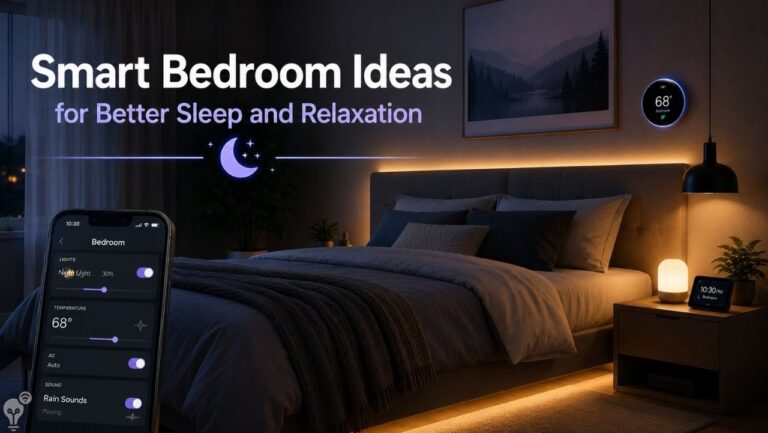
Not long ago, a “smart home” meant you could turn your lights on with your phone instead of a switch. Revolutionary. Game-changing. Also, slightly ridiculous when you think about it too hard.
Fast forward to today, and AI has entered the chat — literally. Tools like ChatGPT, combined with smart home ecosystems, are quietly shifting what it means to live in an intelligent home. We’re moving from devices that do what you tell them, to systems that understand what you mean, anticipate what you need, and learn how you actually live.
Here’s what’s changing, what’s already here, and why it matters more than most people realise.
From Commands to Conversations
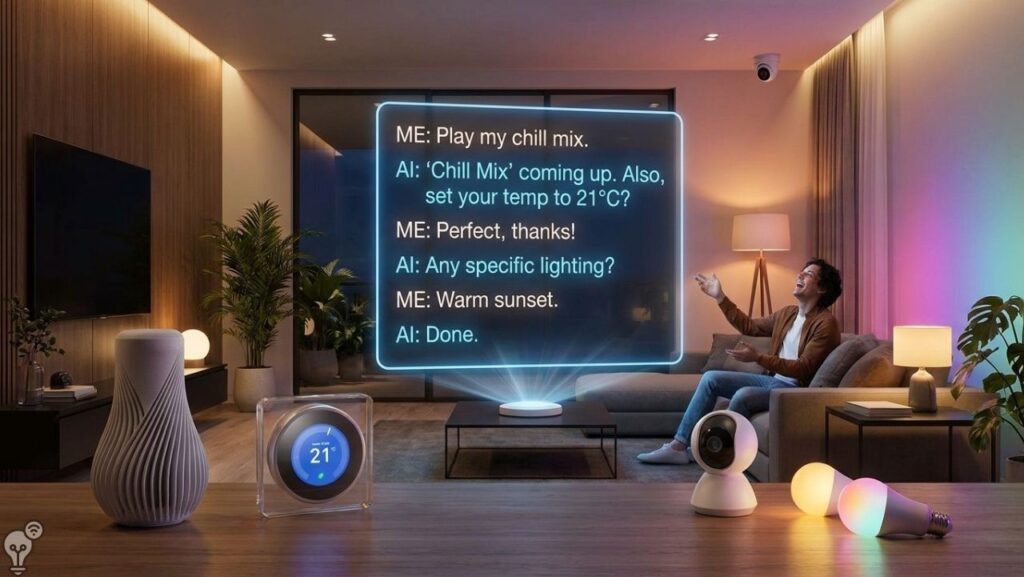
The first generation of voice assistants — Alexa, Siri, Google Assistant — were essentially very sophisticated remotes. You said a specific phrase, they did a specific thing. Say it slightly differently? Nothing. Ask a follow-up question? They forgot the original conversation immediately.
AI language models change this completely. Instead of learning to speak your device’s language, the device learns to understand yours.
“It’s getting a bit stuffy in here and I’ve got a headache” — a traditional voice assistant does nothing with this. An AI-integrated smart home might dim the lights, lower the thermostat slightly, turn on the air purifier, and suggest closing the blinds to reduce glare. Not because you issued four separate commands, but because it understood the context.
This shift from command-response to genuine conversation is the most significant change AI brings to smart home technology — and we’re only at the beginning of it.
Routines That Actually Fit Your Life
Setting up smart home automations has always required a certain kind of person — someone patient enough to think in IF-THEN logic, comfortable with menus and triggers and conditions. Most people set up one or two basic routines and leave the rest untouched.
AI changes the setup experience entirely. Instead of building automations manually, you describe what you want in plain language:
“On weekday mornings, gradually brighten the bedroom lights starting at 6:45am, have the coffee maker start at 7am, and switch the thermostat to daytime mode when I leave.”
Done. No menus. No trigger logic. No three-step tutorials. Just tell it what you want and it builds the routine.
More importantly, AI can suggest routines based on your behaviour. Notice that you always turn on the living room lamp at sunset? It suggests automating that. Notice the thermostat gets manually adjusted every morning? It offers to build a schedule. The system gets smarter about your life without you having to teach it explicitly.
Energy Management That Actually Thinks
One of the most practical applications of AI in smart homes is intelligent energy management — and this is where the financial benefits become very real.
Traditional smart thermostats learned your schedule over time and adjusted accordingly. AI-powered systems go further. They factor in the weather forecast, your calendar, energy pricing (some utilities charge more at peak hours), and your personal comfort preferences — all at once.
The result: your home pre-heats or pre-cools before energy prices spike, adjusts based on whether rain is coming, and learns that you prefer a slightly warmer temperature on weekends. It doesn’t just follow a schedule — it makes decisions.
Smart plugs and energy monitoring devices, connected to an AI layer, can go further still — identifying which devices are consuming the most power, flagging inefficiencies, and suggesting specific changes. “Your washing machine uses 40% less energy on the eco cycle and your laundry still comes out clean — want me to remind you to switch?”


Security That Understands Context
Smart security cameras have existed for years. AI makes them dramatically more useful.
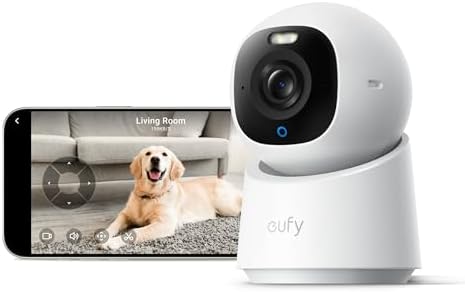
The difference between a basic smart camera and an AI-powered one is the difference between a camera that records everything and a camera that understands what it’s seeing. AI cameras can distinguish between a person, a car, an animal, and a shadow — eliminating the endless false alerts that cause most people to disable notifications entirely.
More advanced systems recognise familiar faces (family members, regular visitors) and flag genuinely unfamiliar ones. They can detect unusual patterns — a door that’s been left open longer than usual, movement in a room at an unexpected hour — and alert you only when something is actually worth your attention.
The practical effect: security that you actually trust and use, rather than a camera system you’ve muted because it kept alerting you about passing cats.


The Personal Assistant That Knows Your Home
This is where things get genuinely interesting. Integrating AI assistants with smart home systems creates something that didn’t really exist before: a home that can answer questions about itself.
“Did I leave the back door unlocked?” — checked and answered.
“How much have I spent on electricity this month compared to last month?” — pulled from your energy monitor.
“Has anyone rung the doorbell while I was out?” — reviewed and summarised.
“My parents are visiting this weekend — what should I set the guest room temperature to?” — adjusted.
Your home stops being a collection of separate devices with separate apps and becomes something closer to a genuinely responsive environment. One that you talk to like a person and that understands your life well enough to be actually useful.


What’s Already Available Right Now
This isn’t all future speculation. A significant amount of it is available today:
Google Home with Gemini AI — Google has been integrating its Gemini AI model into Google Home, enabling more natural conversation and better contextual understanding across connected devices.


Amazon Alexa+ — Amazon’s updated Alexa uses large language model technology for more conversational interaction, better routine building, and smarter responses.



Apple Intelligence + HomeKit — Apple’s AI layer brings Siri improvements and on-device processing for smarter, more private home automation.
Home Assistant with AI integrations — For the technically inclined, Home Assistant (the open-source platform) can be connected directly to ChatGPT or local AI models, enabling highly customised AI-powered automation with full privacy.
The gap between what AI can do and what your average smart home setup currently does is closing fast. Every major platform is racing to integrate more intelligence into their ecosystem.
The Privacy Question (Worth Asking)
More intelligence requires more data. A smart home that understands your schedule, habits, preferences, and behaviour is, by definition, collecting a lot of information about how you live.
This is worth thinking about seriously. The practical questions:
- Where is the data processed? On-device (more private) or in the cloud (more capable but less private)?
- Who owns the data your home generates?
- What happens if the company changes its privacy policy or shuts down?
Different platforms take very different approaches. Apple leans heavily on on-device processing and privacy. Google and Amazon are more cloud-dependent. Home Assistant processes everything locally by default.
There’s no single right answer — but it’s worth knowing what you’re trading when you invite AI more deeply into your home.
A Home That Actually Gets You
The promise of the smart home has always been a home that makes life easier. For years, the reality has been: a home that makes some things slightly more convenient if you remember to set them up correctly and don’t mind occasionally shouting at a speaker that mishears you.
AI is closing the gap between the promise and the reality. Not all at once, and not perfectly yet. But the direction is clear: homes that understand context, learn from behaviour, manage themselves intelligently, and respond to natural language instead of rigid commands.
It’s less science fiction than it used to be. And it’s coming faster than most people expect.
Curious about what AI-powered smart home devices are available right now? Browse the full collection of smart home guides on Inovateia.